
Spring Repair
GARAGE DOOR SPRING REPAIR IN CINCINNATI, OH
A standard torsion spring is rated for about 10,000 cycles, and one cycle means one open and one close. At 4 cycles a day, that works out to roughly 7 years before the steel gives out. Welcome Home Garage Doors provides garage door spring repair in Cincinnati, OH, covering torsion and extension springs, matched pairs, cables and drums, tension and balance, and yearly inspections. We use high-quality springs sized to your door and finish most jobs in a few hours or less.
THE SPRING LIFTS THE DOOR. THE OPENER JUST STEERS.
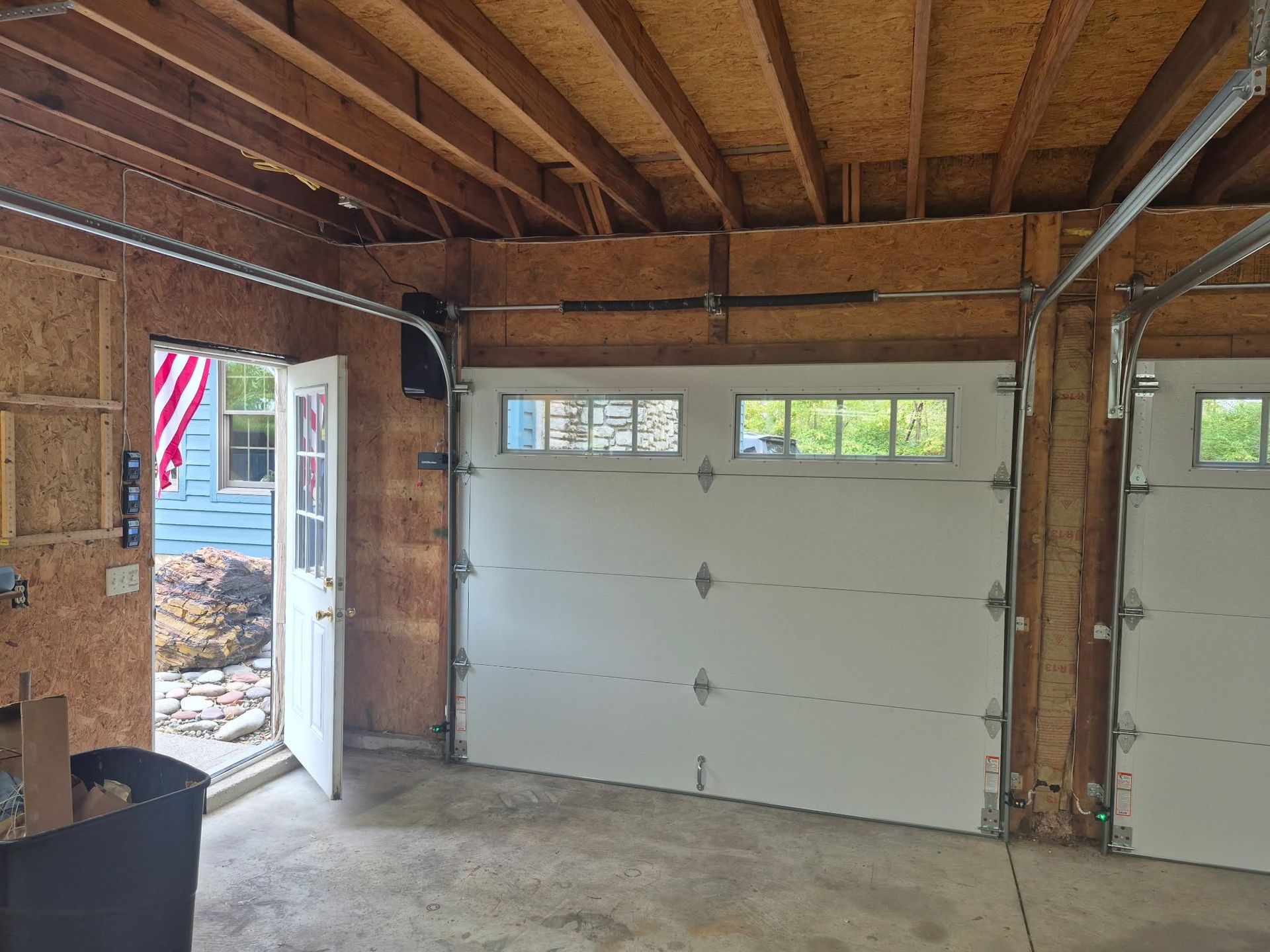
Your garage door is a hefty slab, and the opener is not what lifts it. Coiled steel above the opening or along the tracks carries that weight, storing energy as the door closes and releasing it as the door rises. When a spring snaps, the opener strains against dead weight, the door groans a few inches, and your morning goes nowhere.
That is why a broken spring is a stop-everything problem. Never pull the red release cord with a broken spring and the door open. Leave it closed, keep everyone clear, and let us handle it.
- Both spring types replaced on site
- Replacements sized to your door weight
- Cables and drums inspected together
- Balance tuned before we leave
SPRING REPAIR
A BROKEN SPRING IS NOT A WEEKEND PROJECT.
Garage door springs hold enough stored tension to bend a wrench or break a wrist. Winding bars slip, set screws strip, and a cable under load can whip across the garage. We carry the right bars, clamps, and springs on the truck, and we unwind and rewind tension in a set order every time. Before quoting anything, we inspect tension and wear on the whole system, then hand you a clear estimate for the repair.
COLD MORNINGS ARE WHEN SPRINGS LET GO.
Steel grows less forgiving as it chills, and January here routinely drops into the low 20s. A spring that has been wearing quietly for years often snaps on the first bitter morning it tries to lift the door. Road salt and Ohio River valley humidity speed things along by pitting the coils with rust. From Blue Ash to Florence, we see the pattern every winter, and we roll out ready for it.
WE MATCH THE SPRING TO THE DOOR, NOT THE SHELF.
Spring sizing is math, not guesswork. Wire gauge, inside diameter, and length all depend on your door's weight, height, and track setup, and a mismatch leaves the door heavy, jumpy, or ready to fail early. In 9+ years of spring work, we have learned to measure the old spring, test the balance by hand, and check the numbers twice. Want a spring built for the door you actually own?
WHY CHOOSE US FOR GARAGE DOOR SPRING REPAIR.
Springs Sized to Your Door
Off-the-shelf guesses wear out fast. We measure wire, diameter, and length, then match the replacement to your door's weight and height, so the opener is not straining and the door stays put when you stop it halfway.
An Estimate You Can Read
Before a single coil comes down, we inspect tension and wear across the whole system and explain what failed. You see the estimate in person, ask anything, and approve the work only when it makes sense to you.
Most Jobs Done in Hours
Repairs usually take a few hours or less. With the parts already on the truck, you are not waiting days for an order to arrive while your car sits trapped behind a door that will not lift.
High-Cycle Options for Busy Doors
Doors that open many times a day chew through standard springs. For constant traffic, high-cycle springs rated 25,000, 50,000, or 100,000+ cycles stretch the time between replacements, which suits warehouses, loading docks, and commercial bays.
A Safety Check on Every Job
Tension is only half the job. After the replacement springs go in, we test balance, run the auto-reverse check, and confirm the photo eyes line up, so the door lifts evenly and stops the instant something blocks its path.
Parts Built to Handle Winter
Coils face salt, damp air, and raw January mornings. We install high-quality springs and inspect the neighboring cables and bearings, because a new spring paired with rusted hardware is still a repair waiting to happen.
WHAT WE REPLACE
OUR SPRING REPAIR WORK
Springs rarely fail alone, so our work covers the full lifting system. Here is what we replace and adjust, from the coil above your door to the cables and drums that turn its stored energy into lift.
TORSION
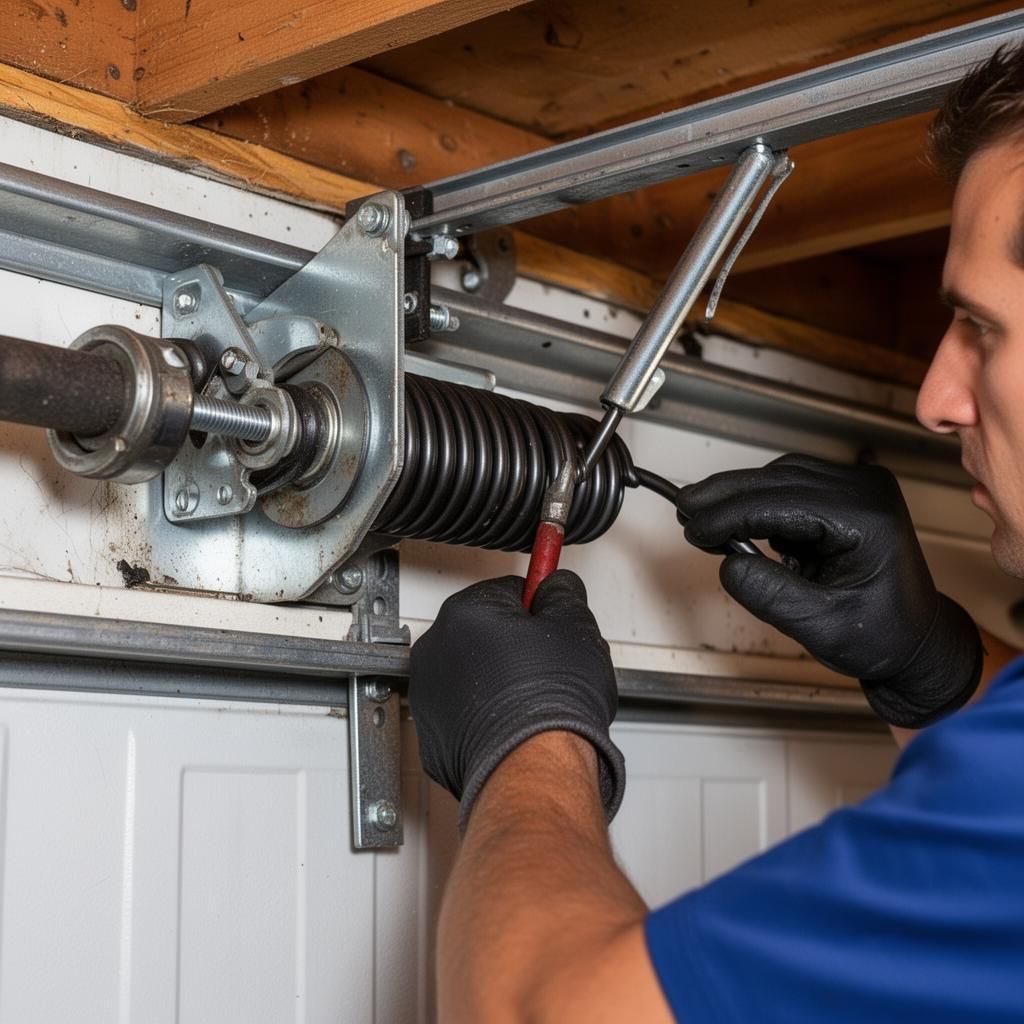
Torsion Spring Replacement
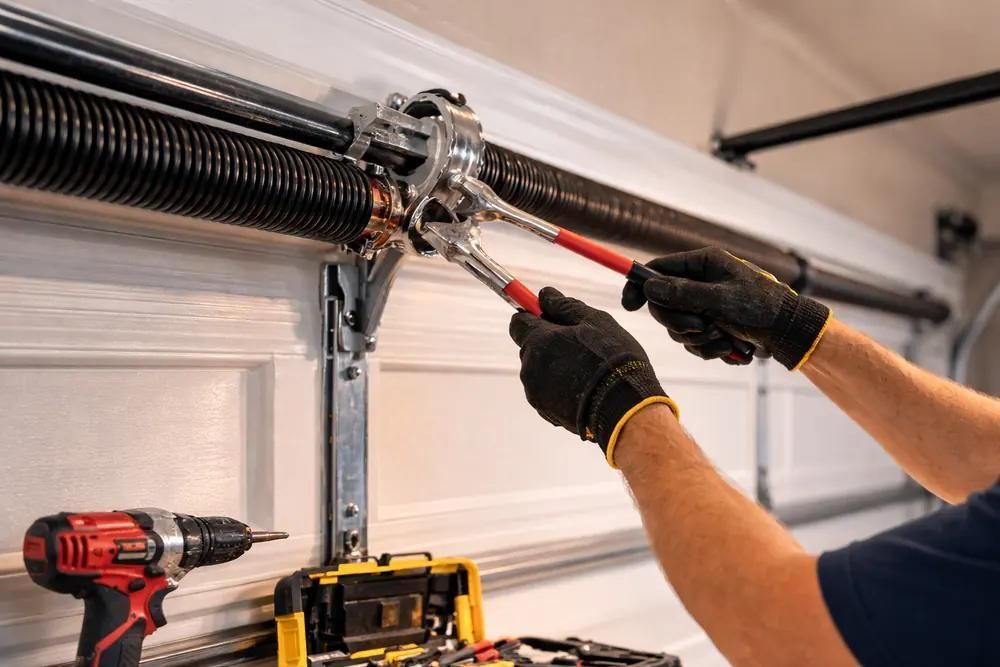
Mounted on a bar above the opening, torsion springs twist to lift the door and typically last 10,000 to 15,000 cycles. We clamp the door, unwind the old spring with proper winding bars, install the new one, and set the correct turns.
EXTENSION
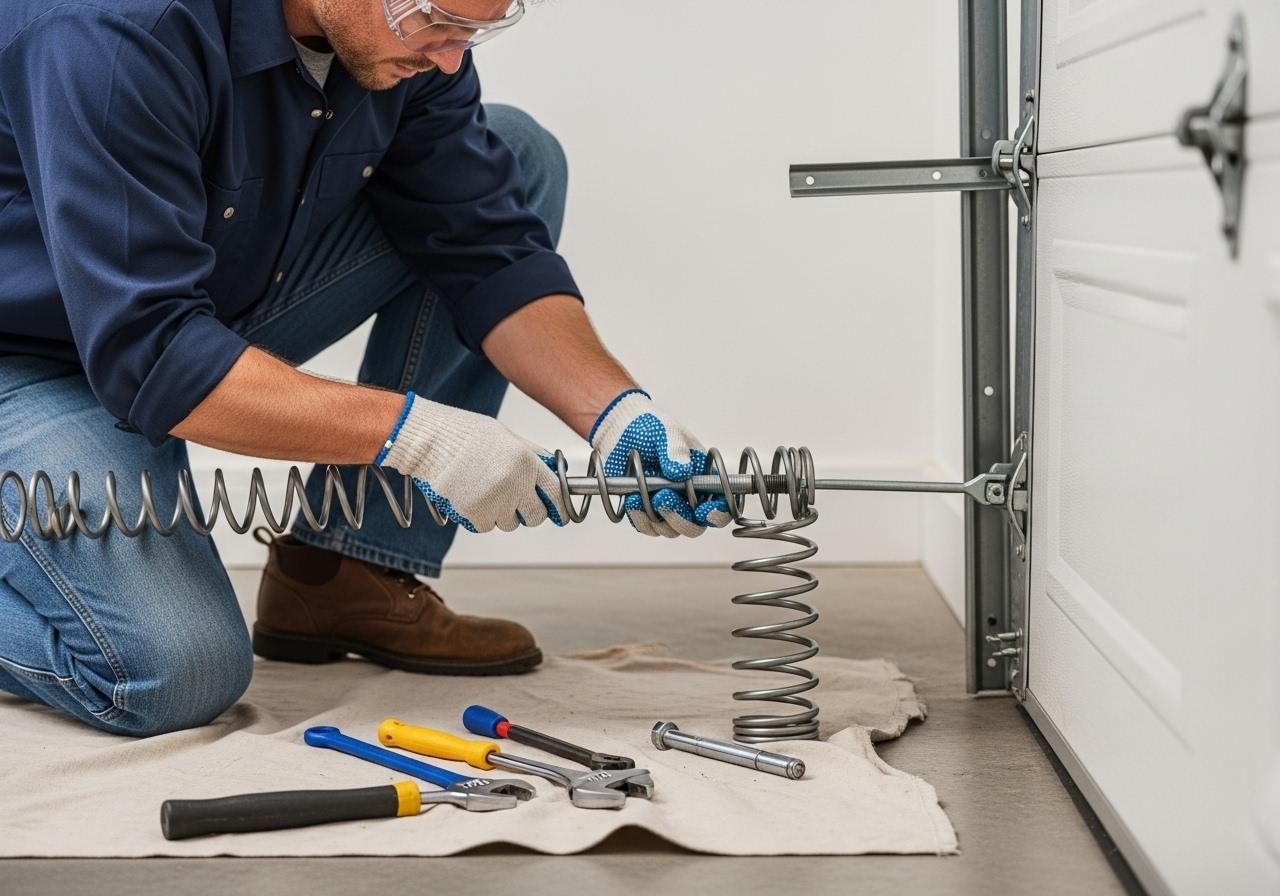
Extension Spring Replacement
Stretched along the horizontal tracks, extension springs show up on many older and lighter doors and typically last 5,000 to 10,000 cycles. We replace them with safety cables threaded through the center, so a snapped spring cannot fly loose.
PAIRS
Matched Spring Pairs
Two springs installed at the same time wear at the same rate. When one breaks, the other has usually logged the same cycles, so we recommend replacing both and balancing them together to avoid a second service call within months.
CABLES
Cable and Drum Replacement
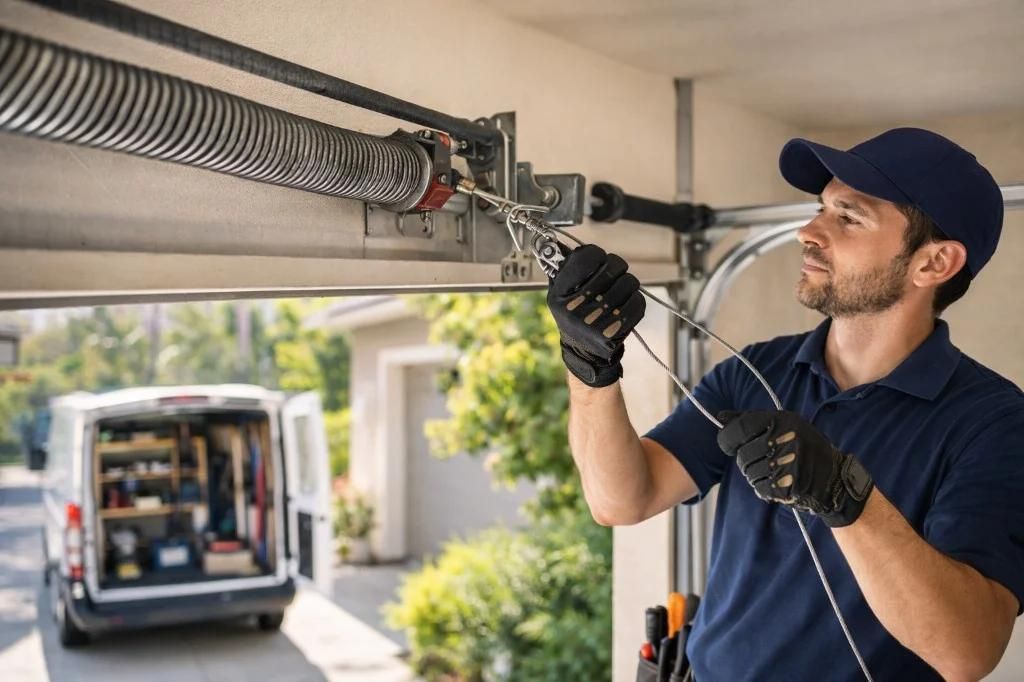
Lift cables wrap around drums at each end of the torsion bar. A spring failure often frays or unspools them, so we inspect both, replace worn cables or cracked drums, and wind each side evenly for a level lift.
BALANCE
Tension and Balance Adjustment
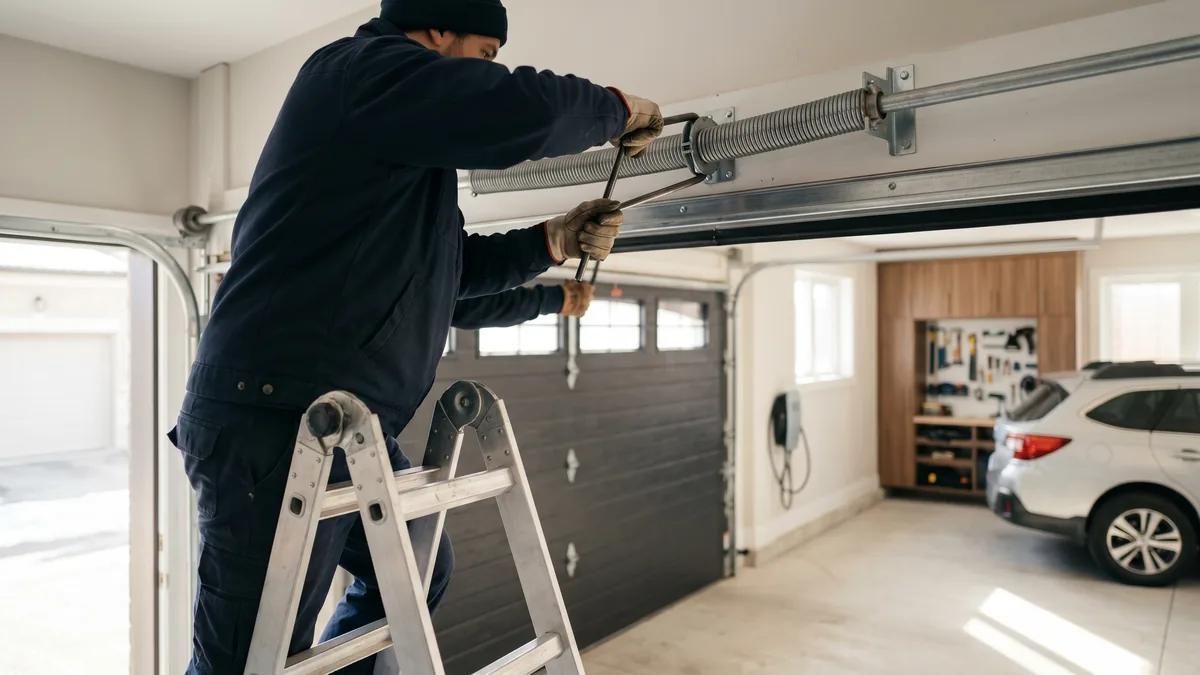
Sometimes the spring is fine and simply out of adjustment. We add or remove tension in small steps until the door holds steady at waist height, which takes the load off your opener and keeps travel smooth.
INSPECTION
Annual Spring Inspection
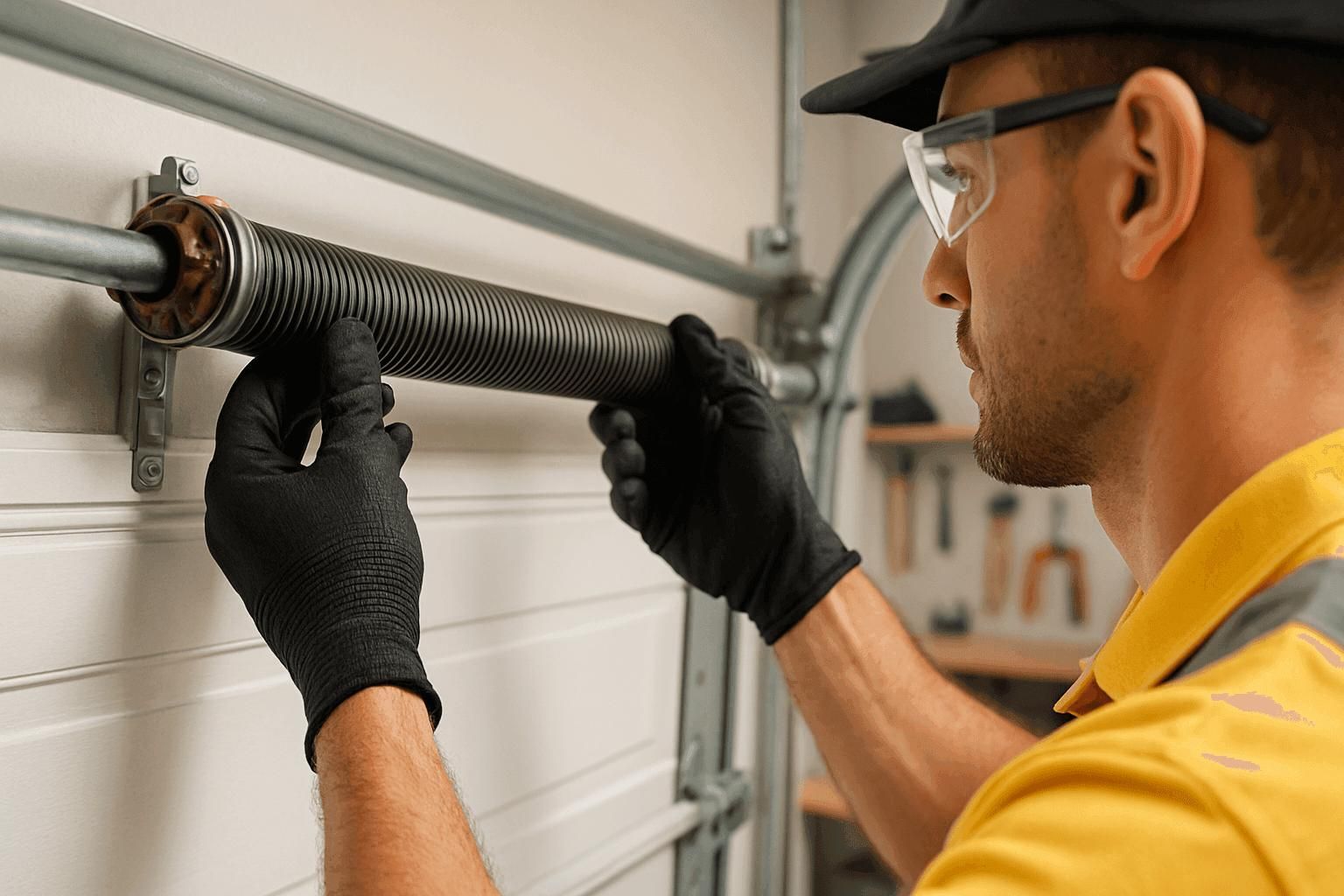
Each year, we check coils for gaps, rust, and stretch, test balance, and watch how the door behaves through a full cycle. Catching a tired spring on your schedule beats hearing it snap on a January morning.
Real Reviews · Real Customers
WHAT OUR CLIENTS SAY.
Reviews below come from homeowners who trusted us with the front of the house. Read what they say about install day, the finished look, and how the door runs months later, then compare it with our 5-star Google rating before you book your estimate.
faq
FREQUENTLY ASKED QUESTIONS.
Urgent questions pop up when a spring snaps, usually while a car is stuck inside. Here are straight answers about warning signs, lifespans, cold snaps, repair times, and why this job belongs with a trained technician.
How do I know if my garage door spring is broken?
Listen for a loud bang from the garage, the classic sign. You may also see a gap in the torsion coil, a door that feels extremely heavy, slack cables, or an opener that strains and lifts only a few inches.
How long do garage door springs last?
Torsion springs typically last 10,000 to 15,000 cycles, while extension springs last 5,000 to 10,000. At 4 cycles a day, a 10,000-cycle torsion spring works out to roughly 7 years of daily use.
Should both garage door springs be replaced at the same time?
Yes, in most cases. Paired springs share the same age and cycle count, so the survivor is usually close to failing too. Welcome Home Garage Doors replaces both on two-spring doors in Cincinnati, OH to keep the door balanced.
Can I open my garage door with a broken spring?
No, you should not try. Without spring tension the door is dead weight, and pulling the red release cord while it is open can let it slam down. Keep it closed and keep people away from it.
What is the difference between torsion and extension springs?
Location and motion set them apart. Torsion springs mount above the opening and twist to lift the door, while extension springs stretch along the side tracks. Torsion springs usually last longer and give a more controlled lift.
Why do garage door springs break in cold weather?
Cold makes steel more brittle, and a spring near the end of its cycle life often gives out when temperatures drop. Welcome Home Garage Doors sees the spike in Cincinnati, OH, where the normal January low is 23°F.
How long does it take to replace a garage door spring?
Most spring repairs take a few hours or less. That window covers removing the failed spring, installing and tensioning the replacement, checking cables and drums, and testing balance and auto-reverse before the door goes back into service.
Is it dangerous to replace garage door springs yourself?
Very. Springs store enough tension to snap a winding bar out of your hands, and a slip can cause serious injury. The work requires proper bars, clamps, and a set sequence that trained technicians repeat daily.
LEARN MORE →
LEARN MORE →
HOW WE WORK
FROM LOUD BANG TO BALANCED DOOR, HERE IS HOW.
STEP 01
Leave the Door Closed
Stop using the opener the moment you hear the bang. Keep the door down, leave the red release cord alone, and send us a note through the booking form describing what happened and what you see above the door.
STEP 02
Measure the Old Spring
On arrival, our technician inspects tension and wear, then measures wire gauge, inside diameter, and length. Cables, drums, bearings, and rollers get a look too, because a spring failure rarely leaves its neighbors untouched.
STEP 03
Review the Estimate
You receive an estimate in person, covering the springs, any worn cables or drums, and the labor. Nothing moves forward until you say yes, and every question gets a straight answer before a tool comes out.
STEP 04
Wind the New Springs
Next comes the careful part. We clamp the door, release any remaining tension, install the replacement springs, and wind them to the correct number of turns in a set sequence, checking each side as we go.
STEP 05
Balance and Adjust
Adjustments continue until the door holds steady at waist height and rises evenly on both sides. Then we lubricate the springs and bearings so the fresh springs start their cycle count on the right foot.
STEP 06
Run the Final Safety Check
Last, we run the door up and down several times, test auto-reverse with a 2x4, confirm the photo eyes, and walk you through the work. You also learn why an annual spring inspection keeps the next bang from surprising you.